Chinese herbs ·
Dragon tree resin (龙血竭): finding and extracting a red tree resin
Dragon tree resin is the material known as lóng xuè jié in Chinese medicine. Its identity and quality are shaped by where it grows, when it is collected, and the processing that follows harvest.
The material and its source
Dragon tree resin comes from Dracaena cochinchinensis (Lour.) S.C.Chen, in the Asparagaceae family. The medicinal material is the processed resin from resin-bearing stem wood.
The resin-bearing dragon tree grows slowly in tropical forest and can survive for centuries. Resin accumulates within injured or altered wood, so usable material is scattered rather than produced uniformly through the trunk.
Harvest
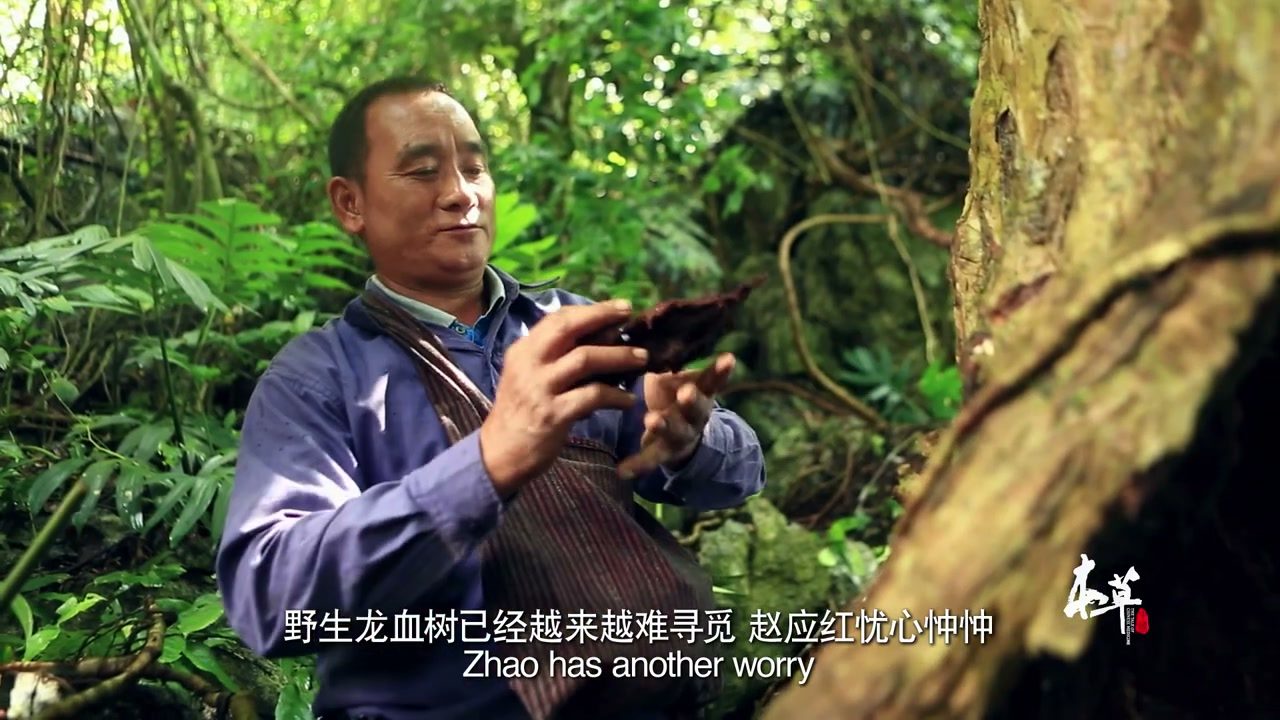
Collectors search for reddish resin-bearing wood instead of stripping an entire healthy tree. Scarcity makes careful selection and protection of living trees central to any sustainable harvest.
Processing
Resinous wood is chopped and heated in water for days. The red extract is separated and concentrated until it solidifies into the dense medicinal resin sold as Long Xue Jie.
Traditional uses and symptom patterns
Long Xue Jie is traditionally associated with traumatic pain, blood-stasis patterns, and some bleeding applications. It must not be assumed equivalent to pharmacopeial Xue Jie, a different resin obtained from Daemonorops draco fruit.
What modern research has examined
Reviews of Dracaena cochinchinensis describe phenolic compounds and mainly laboratory or animal findings related to inflammation, pain, wounds, and circulation. Review authors identify major quality-control gaps and a need for stronger studies before clinical conclusions can be drawn.
Safety and interactions
Human safety, interaction, pregnancy, and dosing data are inadequate. Identity and purity are major concerns because unrelated resins share the name dragon’s blood. Unsupervised use is particularly inappropriate with anticoagulant or antiplatelet medicines, during pregnancy, or before surgery.
Sources
- Looking for thousand years old medicinal materials | DO-ING documentary | CHI-ENG sub
The Tale of Chinese Medicine Official Channel · Cultivation, harvest, processing footage, and traditional-use descriptions.
- Treating illness Without Pills, The Magical TCM | Do-ing short documentary | CHI-ENG sub
The Tale of Chinese Medicine Official Channel · Additional harvest or processing footage incorporated into the same article.
- HKCMMS: Draconis Sanguis (Xue Jie)
Hong Kong Chinese Medicine Regulatory Office · Documents that pharmacopeial Xue Jie is prepared Daemonorops draco fruit resin, not Dracaena stem resin.
- A systematic review of Dracaena cochinchinensis, a source of dragon's blood
Molecules · Botanical source and preclinical evidence for the Long Xue Jie material shown.
- Phenolic constituents, pharmacological activities, quality control, and metabolism of Dracaena species
Journal of Ethnopharmacology · Quality-control gaps and limits of the pharmacology literature.
Read next
Ephedra herb and root (麻黄): two parts with sharply different risks
Ephedra herb and root · má huáng / má huáng gēn
Glossy privet fruit and Eclipta herb (女贞子 / 墨旱莲): a field-and-tree pairing
Glossy privet fruit and Eclipta herb · nǚ zhēn zǐ / mò hàn lián
Eucommia bark (杜仲): harvesting bark without losing the tree
Eucommia bark · dù zhòng
