Chinese herbs ·
Eucommia bark (杜仲): harvesting bark without losing the tree
Eucommia bark is the material known as dù zhòng in Chinese medicine. Its identity and quality are shaped by where it grows, when it is collected, and the processing that follows harvest.
The material and its source
Eucommia bark comes from Eucommia ulmoides Oliv., in the Eucommiaceae family. The medicinal material is the dried bark.
Eucommia is a deciduous tree native to China and now widely cultivated. A harvestable trunk takes years to develop, so bark production depends on long-term tree care rather than an annual crop.
Harvest
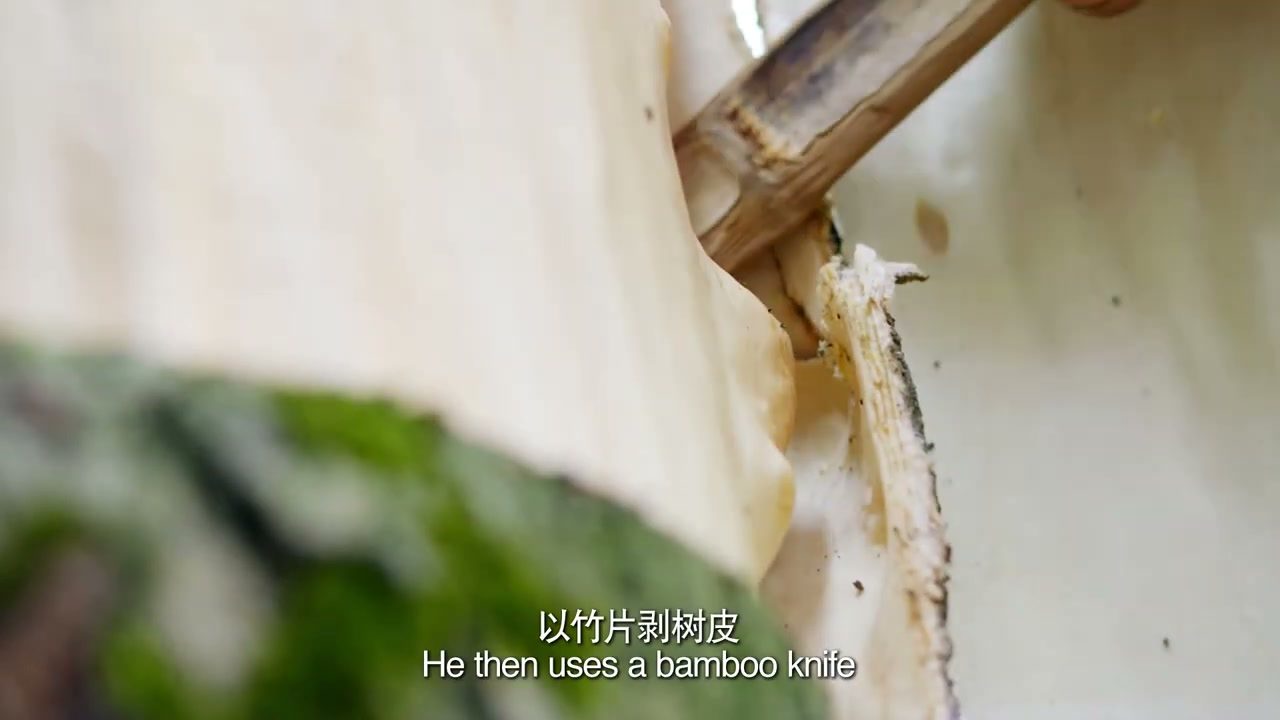
Bark loosens most readily during the warm growing season when sap is moving. Harvesters remove only part of the bark from mature trunks, leaving enough living tissue for the tree to recover instead of felling it.
Processing
Fresh bark is pressed flat, its rough outer surface is cleaned as needed, and it is dried. When broken, characteristic elastic white threads can be seen stretching between the pieces.
Traditional uses and symptom patterns
Du Zhong appears in formulas for weakness or aching of the lower back and knees and in some pregnancy-related patterns. Traditional indications vary with pattern assessment, preparation, dose, and the rest of the formula.
What modern research has examined
Eucommia bark extracts have been examined in a small number of human studies, but much of the evidence remains preclinical or concerns preparations unlike traditional decoctions. The available evidence is not sufficient to establish effectiveness for blood pressure, bone disease, or pain.
Safety and interactions
Human interaction and pregnancy data are limited. A laboratory and animal safety assessment found kidney changes after prolonged high-dose extract exposure, which cannot be translated directly into a human dose but reinforces the need to avoid unsupervised concentrated or long-term use.
Sources
- The wisdom of modern people | DO-ING documentary | CHI-ENG sub
The Tale of Chinese Medicine Official Channel · Cultivation, harvest, processing footage, and traditional-use descriptions.
- HKCMMS: Cortex Eucommiae
Hong Kong Chinese Medicine Regulatory Office · Official source species, plant part, harvest period, processing, and identification.
- Safety evaluation of Eucommia ulmoides extract
Regulatory Toxicology and Pharmacology · Preclinical high-dose and repeated-exposure safety findings.
Read next
Ephedra herb and root (麻黄): two parts with sharply different risks
Ephedra herb and root · má huáng / má huáng gēn
Glossy privet fruit and Eclipta herb (女贞子 / 墨旱莲): a field-and-tree pairing
Glossy privet fruit and Eclipta herb · nǚ zhēn zǐ / mò hàn lián
Dragon tree resin (龙血竭): finding and extracting a red tree resin
Dragon tree resin · lóng xuè jié
