Chinese herbs ·
Niu Xi (牛膝): from cultivated field to dried medicinal root
Niu xi is the dried medicinal root of Achyranthes bidentata. Its quality is shaped long before it reaches a pharmacy: by the soil in which the root develops, months of field care, a demanding winter harvest, and controlled drying after the root is lifted.
The plant and its medicinal root
Achyranthes bidentata Blume is a member of the amaranth family. Although the stems and leaves are visible above ground, the cultivated root is the part collected for traditional medicine. The official drug name used by the Hong Kong Chinese Materia Medica Standards is Radix Achyranthis Bidentatae.
The Chinese name 牛膝, niu xi, is commonly translated as “ox knee,” referring to joint-like features associated with the plant. Achyranthes bidentata is also known as Huai niu xi. It should be distinguished from Chuan niu xi, a related market herb generally sourced from Cyathula officinalis.
Planting and field growth
Niu xi is commonly raised from seed in prepared fields. Young plants are spaced and tended so that their roots have room to extend downward. Loose, workable soil supports the development of the long main root and makes it less likely to fork, break, or become badly damaged during harvest.
Through the warmer growing season, the plant develops stems and leaves above ground while the medicinal root thickens beneath the surface. Farmers manage weeds, moisture, and soil condition, but most of the crop's commercial value remains hidden until the root is lifted.
Winter harvest
The root is collected in winter after the aerial parts of the plant have withered. Harvest must be completed before frozen soil makes extraction more difficult. Because the roots grow long and deep, the surrounding earth is loosened before each plant is pulled.
Harvesting is slow physical work. Pulling too quickly can snap the root, while digging too close can cut it. Soil and fine rootlets must be removed without destroying the long main body, so hand tools and careful handling remain important even where machinery is available.
Cleaning, bundling, and drying
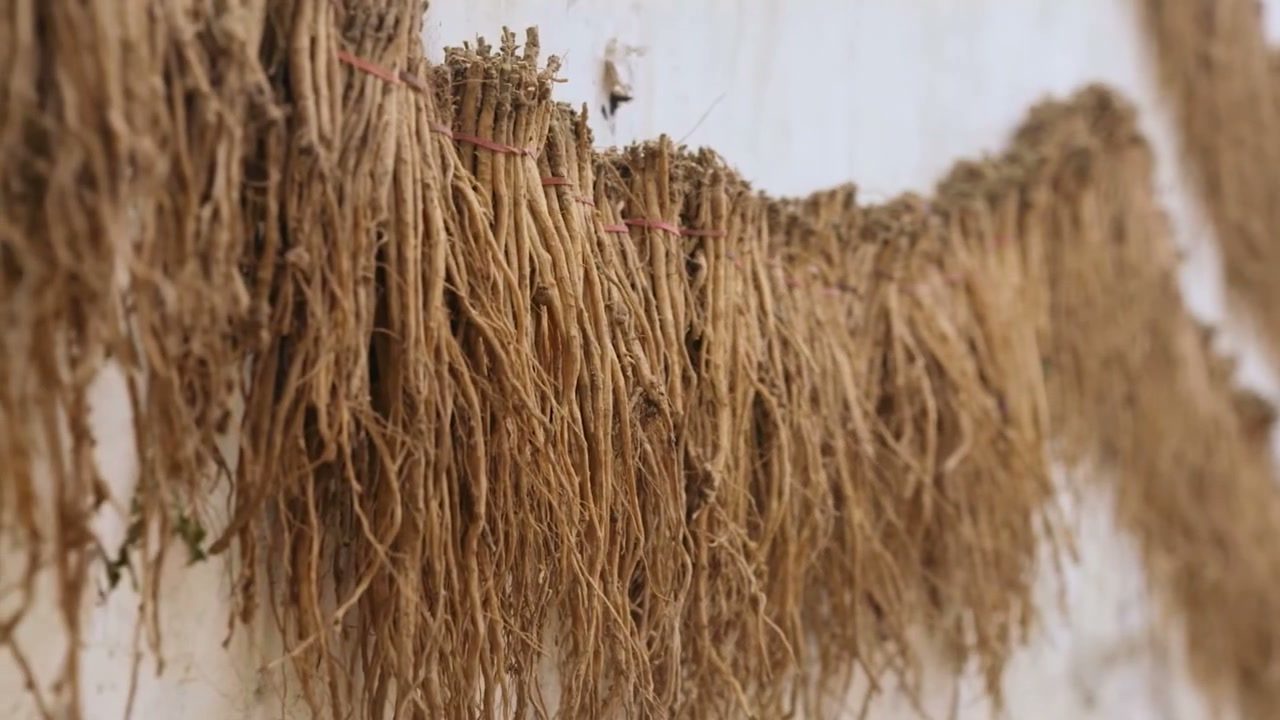
After harvest, remaining soil and small rootlets are removed. The roots are tied into small bundles and partly dried in the sun until their outer surfaces wrinkle. Their tops are then trimmed evenly, and drying continues until the roots are suitable for storage.
The finished root is described as slender and cylindrical, straight or slightly curved, and greyish-yellow to pale brown. Fine lengthwise wrinkles appear on the surface. When fully dry, the root is hard and fragile; the interior is pale yellowish-brown and can appear slightly oily. These traits support professional quality assessment, but appearance alone cannot confirm identity, purity, or freedom from contamination.
Traditional uses and symptom patterns
Traditional Chinese medicine commonly places niu xi in formulas for aching or weakness involving the lower back, knees, bones, and tendons. Historical records also associate it with menstrual difficulty, urinary difficulty, and swelling. In traditional theory, it is described as guiding movement downward and is often combined with du zhong, or Eucommia bark.
These are traditional use patterns, not predictions of individual results. The meaning of a symptom, the processed form of the herb, its dose, the other ingredients in a formula, and the individual receiving it all affect how a qualified practitioner may use it.
What modern research has examined
Researchers have identified saponins, steroids, polysaccharides, peptides, and other compounds in Achyranthes bidentata root. Extracts and isolated constituents have been examined in laboratory and animal models related to bone, inflammation, metabolism, kidney function, and the nervous system.
This research does not yet establish clinical benefit for people. A 2026 review reports that mechanisms remain incomplete and that clinical-trial validation is lacking. Laboratory findings therefore cannot determine whether niu xi is appropriate or effective for an individual reader.
Safety and interactions
A current review reports general safety at conventionally recommended dosages while also calling for deeper toxicology, pharmacokinetic, and clinical research. This is not a basis for choosing a dose without professional guidance or assuming that concentrated extracts, pregnancy, long-term use, and combinations with medicines are safe.
Traditional descriptions involving blood movement or urination do not establish that niu xi acts as a clinical anticoagulant or diuretic. Anyone taking prescription medicines or who is pregnant should seek professional advice before considering it.
Sources
- Behind the harvest | DO-ING documentary | CHI-ENG sub
The Tale of Chinese Medicine Official Channel · Field cultivation, harvest and processing footage, plus traditional claims.
- Radix Achyranthis Bidentatae — HKCMMS supplementary monograph
Chinese Medicine Regulatory Office, Department of Health, Hong Kong · Official name, botanical source, harvested part, processing, and physical description.
- Achyranthis bidentatae radix: A comprehensive review of botany, processing methods, ethnopharmacology, phytochemistry, pharmacology, quality control, toxicity, and pharmacokinetics
Journal of Ethnopharmacology · Current evidence overview, safety boundary, and explicit lack of clinical-trial validation.
- Achyranthes bidentata Bl. (Huai NiuXi) and Cyathula officinalis Kuan (Chuan NiuXi): ethnopharmacology, phytochemistry, and pharmacology
Journal of Pharmacy and Pharmacology · Distinction between Huai niu xi and Chuan niu xi.
