Chinese herbs ·
Fleeceflower root (何首乌): from wild tuber to prepared root
Fleeceflower root is the material known as hé shǒu wū in Chinese medicine. Its identity and quality are shaped by where it grows, when it is collected, and the processing that follows harvest.
The material and its source
Fleeceflower root comes from Reynoutria multiflora (Thunb.) Moldenke, in the Polygonaceae family. The medicinal material is the dried root tuber.
He Shou Wu is a climbing perennial whose valuable tuber develops underground over several years. It grows in warm, moist landscapes and can be cultivated, while mature wild roots are increasingly difficult to locate.
Harvest
The tuber is usually lifted after the aerial growth declines. Its irregular shape makes careful digging important; cuts and breakage reduce the amount that can be cleanly sliced and processed.
Processing
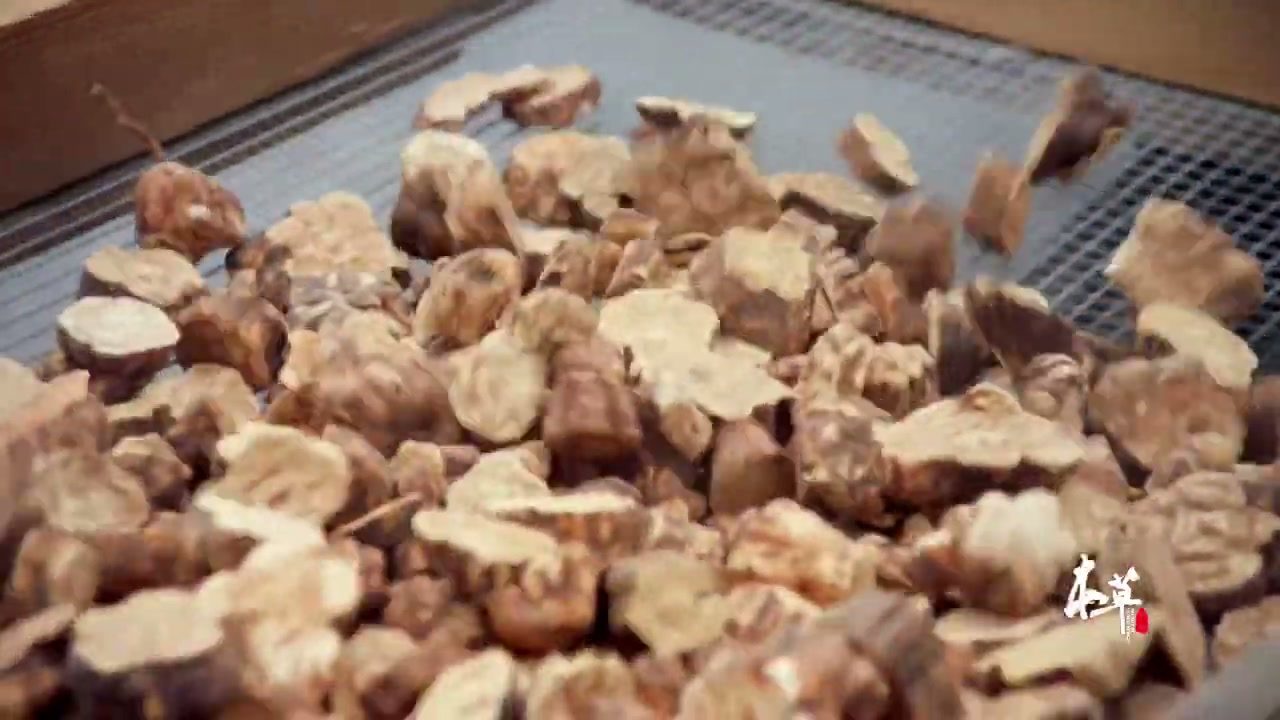
Raw root is cleaned, sliced, and dried. Prepared He Shou Wu is a distinct material produced by repeated moist heating, traditionally with black-bean liquid, followed by drying. Raw and prepared products have different traditional uses and should never be treated as interchangeable.
Traditional uses and symptom patterns
Raw He Shou Wu has traditionally been used in bowel-related patterns, while the prepared form appears in tonic formulas associated with blood and essence deficiency. These categories are historical practice concepts, not proof of benefit.
What modern research has examined
The root contains stilbenes, anthraquinones, and other compounds. Laboratory findings are extensive, but convincing clinical evidence is limited and product composition changes with processing.
Safety and interactions
He Shou Wu has a well-documented association with liver injury, including serious cases. Raw and prepared products can both pose risk. It should not be self-prescribed, and anyone with liver disease or unexplained fatigue, nausea, dark urine, or jaundice should seek medical care.
Sources
- The Mission of Three Generations | DO-ING documentary | CHI-ENG sub
The Tale of Chinese Medicine Official Channel · Cultivation, harvest, processing footage, and traditional-use descriptions.
- Following in the footsteps of ancestors | DO-ING documentary | CHI-ENG sub
The Tale of Chinese Medicine Official Channel · Additional harvest or processing footage incorporated into the same article.
- HKCMMS: Radix Polygoni Multiflori
Hong Kong Chinese Medicine Regulatory Office · Official identity and processing of the unprepared dried root.
- LiverTox: Polygonum Multiflorum
National Institute of Diabetes and Digestive and Kidney Diseases · Established human liver-injury signal, clinical course, and re-exposure risk.
