Chinese herbs ·
Pummelo peel (化橘红): an orchard medicine shaped by place
Pummelo peel is the material known as huà jú hóng in Chinese medicine. Its identity and quality are shaped by where it grows, when it is collected, and the processing that follows harvest.
The material and its source
Pummelo peel comes from Citrus grandis 'Tomentosa' (syn. Citrus maxima 'Tomentosa'), in the Rutaceae family. The medicinal material is the dried outer peel of the immature or nearly mature fruit.
Hua Ju Hong comes from pummelo trees associated with Huazhou in Guangdong. Orchard soil, climate, pruning, and tree age all influence the fruit, whose densely hairy surface is treated as an important identifying feature.
Harvest
The fruits are picked while still immature, before they become ordinary table pummelos. Harvest timing protects the thick aromatic outer peel that is wanted for medicine.
Processing
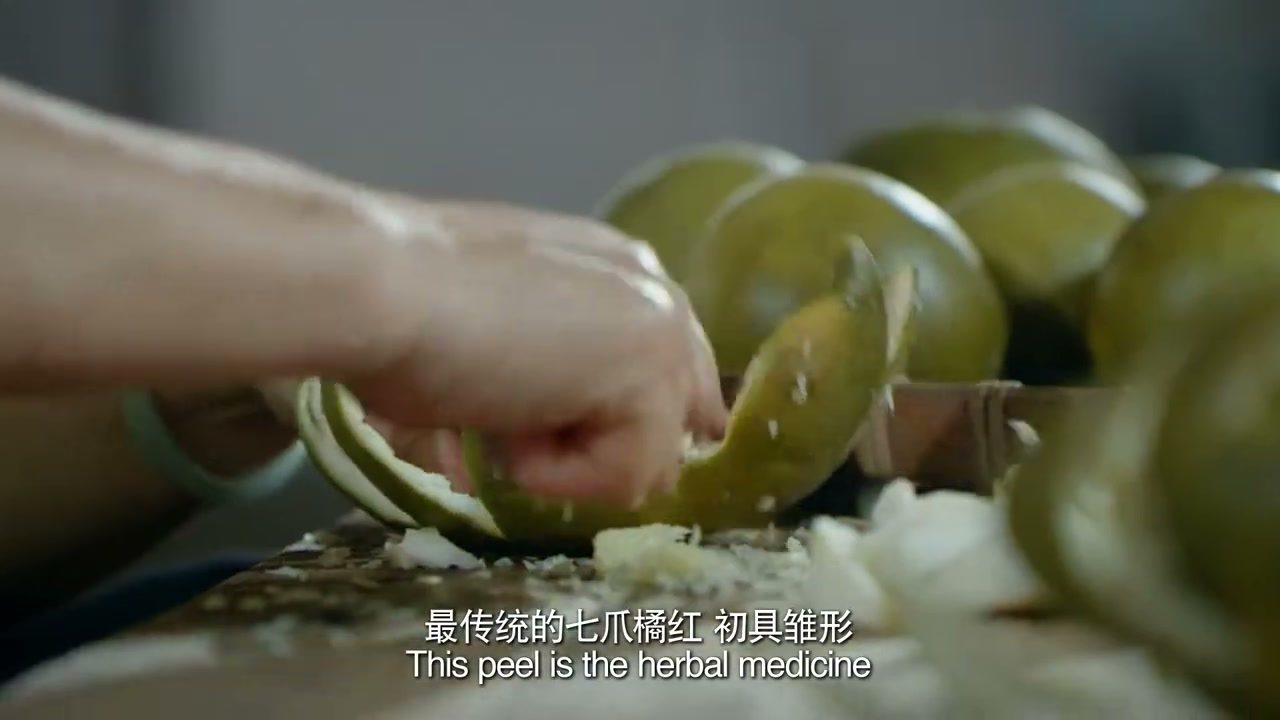
Fresh fruit is heated or blanched, then cut so the peel can be separated into sections. The pieces are repeatedly dried until firm enough for storage and later slicing.
Traditional uses and symptom patterns
Hua Ju Hong is traditionally used in formulas for cough with abundant phlegm and for digestive fullness associated with food stagnation. Those descriptions do not identify the cause of a modern cough or replace medical assessment.
What modern research has examined
Reviews describe naringin, volatile oils, and other constituents of Citri Grandis Exocarpium, but most proposed anti-inflammatory, respiratory, or metabolic effects come from laboratory and animal work. Rigorous clinical evidence for this specific medicinal peel is lacking.
Safety and interactions
Specific human safety and interaction data for Hua Ju Hong are limited. Ordinary pummelo peel is not automatically equivalent to the medicinal material, and a persistent cough, breathing difficulty, fever, or blood in sputum requires medical assessment rather than self-treatment.
Sources
- 700 years of family heritage | DO-ING documentary | CHI-ENG sub
The Tale of Chinese Medicine Official Channel · Cultivation, harvest, processing footage, and traditional-use descriptions.
- Citri Grandis Exocarpium with medicine and food homology: a review
Journal of Ethnopharmacology · Source-material terminology, constituent research, and the lack of rigorous clinical translation.
Read next
Immature and mature bitter orange (枳实 / 枳壳): harvest timing creates two medicines
Immature and mature bitter orange · zhǐ shí / zhǐ ké
Lotus medicines (莲子): one aquatic plant, several harvested materials
Lotus medicines · lián zǐ / lián fáng / lián xū / hé yè
Trichosanthes fruit and root (瓜蒌 / 天花粉): one vine, separate medicines
Trichosanthes fruit and root · guā lóu / tiān huā fěn
