Chinese herbs ·
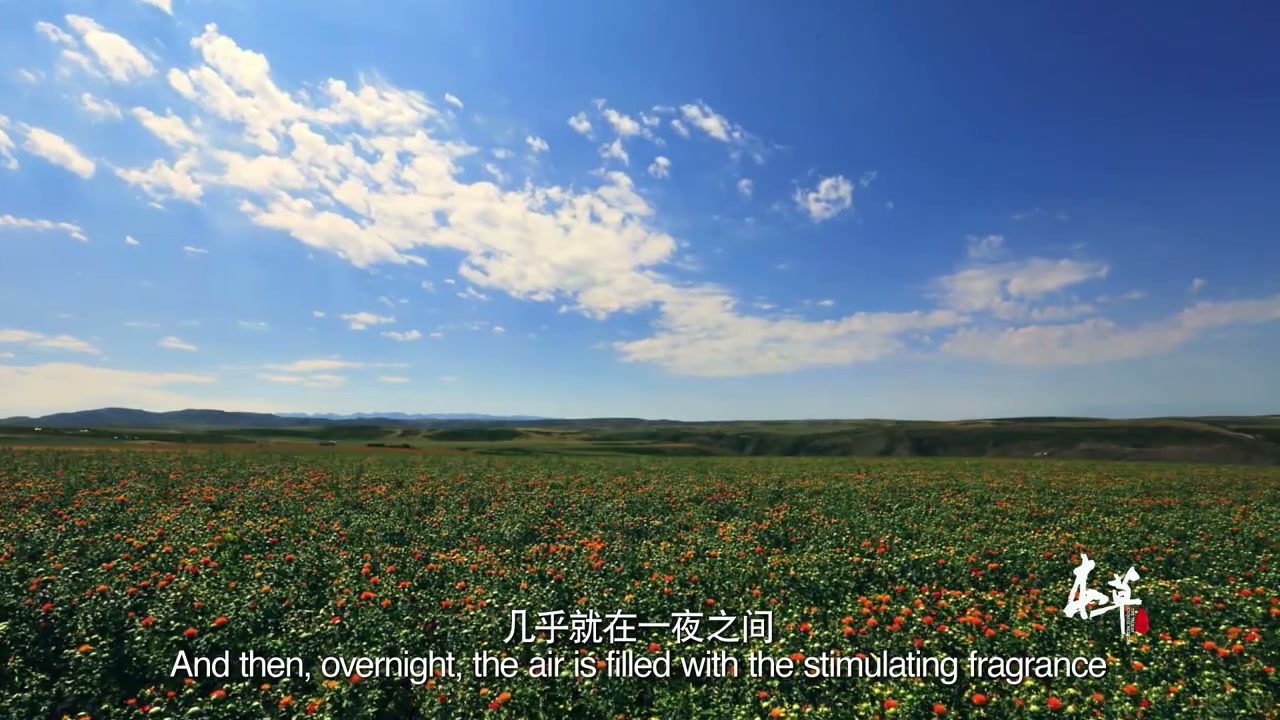
Safflower (红花): a dawn harvest in Xinjiang
Safflower is the material known as hóng huā in Chinese medicine. Its identity and quality are shaped by where it grows, when it is collected, and the processing that follows harvest.
The material and its source
Safflower comes from Carthamus tinctorius L., in the Asteraceae family. The medicinal material is the dried flower.
Safflower is an annual thistle-like crop adapted to sunny, relatively dry fields. Its spiny leaves protect flower heads that gradually change from yellow to orange-red.
Harvest
Pickers enter the fields around dawn during the short peak flowering period. The soft florets are pulled by hand while leaving the developing seed head and much of the plant intact.
Processing
Fresh florets are spread thinly and dried promptly so they do not heat, clump, or darken. The finished material should remain visibly red-orange and free of excessive stems and debris.
Traditional uses and symptom patterns
Hong Hua is traditionally used in formulas for menstrual pain, absent periods, traumatic pain, and other blood-stasis patterns. It is not the same material as saffron, despite confusing English translations.
What modern research has examined
Hydroxysafflor yellow A and safflower-derived injections have been studied in cardiovascular contexts, but these are not equivalent to dried Carthami Flos taken by mouth. Reliable clinical evidence for the dried flower alone remains inadequate.
Safety and interactions
Avoidance during pregnancy is a traditional contraindication rather than a quantified modern risk estimate. Because Hong Hua is used in blood-stasis formulas and human interaction evidence is limited, people using anticoagulant or antiplatelet medicines or preparing for surgery should not self-prescribe it.
Sources
- How herb pickers work in Xinjiang | DO-ING short documentary
The Tale of Chinese Medicine Official Channel · Cultivation, harvest, processing footage, and traditional-use descriptions.
- HKCMMS: Carthami Flos
Hong Kong Chinese Medicine Regulatory Office · Official source species, flower harvest stage, drying, and identification.
- Therapeutic potential of hydroxysafflor yellow A on cardio-cerebrovascular diseases
Frontiers in Pharmacology · Constituent-level evidence used only to explain why injection or isolated-compound findings do not prove dried-flower efficacy.
Read next
Mugwort leaf (艾叶): field growth, harvest, and patient ageing
Mugwort leaf · ài yè
Glossy privet fruit and Eclipta herb (女贞子 / 墨旱莲): a field-and-tree pairing
Glossy privet fruit and Eclipta herb · nǚ zhēn zǐ / mò hàn lián
Atractylodes lancea and white atractylodes (苍术 / 白术): two rhizomes, two processing paths
Atractylodes lancea and white atractylodes · cāng zhú / bái zhú
